
The opinions in guest opinion op-eds represent only the viewpoints of the writer. They do not necessarily reflect those of RedState.com.)
Environmental, social, and governance (ESG) metrics (discussed previously here) are a kind of social credit system designed to coerce businesses — and, by extension, individuals and all of society — to transform their practices.
Investors and banks, and soon the governments, use ESG as a way to get businesses to adopt a more sustainable business model. This is regardless of their customers and employees. Corporate executives often agree to follow the rules because they are able to access cheap capital provided by financial institutions or investors.
The widespread adoption of ESG metrics, which is also commonly called “stakeholder capitalism” — is meant to It can be radically alteredThe evaluation of businesses goes far beyond simple economic indicators like revenue, profit and customer satisfaction.
Instead of looking at economic and financial considerations, ESG social credit metrics measure things like “Percentage of active workforce covered under collective bargaining agreements” (union labor) and “Percentage of employees per employee category, by age group, gender and other indicators of diversity (e.g. ethnicity).”
(To read more about ESG basics and to watch my video presentation for The Heartland Institute, click here.
Individual investors and small businesses are not required to produce ESG reports, unlike large corporations that spend considerable time and resources on self-reporting ESG. These reports are instead produced by large banks and financial institutions, sometimes without the request of individuals or businesses.
Merrill Lynch, which is a Bank of America subsidiary, provides ESG scores to all of or almost all of its individual investments accounts. Even those of less than $1,000.
Moody’s has created an “ESG Score Predictor” that offers users with ESG reports for 100,000 businesses, many of which have never produced their own ESG metrics. Moody’s algorithm predicts scores by using “company size, location, and industry as inputs.”
When individuals and small businesses have raised concerns about the use of ESG and how it could be used against them— as opposed to merely being applied to corporations for the benefit of investors — banks, investment groups, and their lobbyists have claimed that concerns over ESG are nothing but “conspiracy theories.”
There are strong indications that financial institutions and bank plans to increase ESG use for individual, family, and small business customers. Such a move would have a profound impact on the U.S. economy, as well as society. These are five reasons Americans should be worried.
- Numerous instances have been reported of individuals or businesses being denied financial services and capital access based upon subjective criteria.
It’s impossible to kNow to what extent individuals, organizations, and businesses are nowBecause there is no database or reporting agency that compiles denials on the basis of non-financial grounds, it can be denied you access to loans and financial services. However, many instances of these actions have been documented by media outlets.
In early 2021, Signature Bank and Deutsche Bank AG announced that they will no longer be providing services for former President Donald Trump, or his company, The Trump Organization. This was purely ideological.
In November 2021, WePay, a J.P. Morgan Chase-owned payment processor, informed the Missouri-based Defense of Liberty political action committee that it would stop offering its services to the organization after it planned an event featuring Donald Trump Jr. (Chase later reversed the decision, but only after “Missouri treasurer Scott Fitzpatrick threatened to have the state stop doing business with the bank.”)
Wells Fargo suspected Lauren Witzke of being a 2020 Republican nominee for the Delaware Senate, and closed her bank account.
The Heritage Foundation noted in a 2021 report that “PayPal has admitted to closing accounts flagged by the Southern Poverty Law Center in 2019, now, PayPal has announced a partnership with the left-leaning Anti-Defamation League to focus on ‘further uncovering and disrupting the financial pipelines that support extremist and hate movements.’”
2019 will be the year of New York Post reported that J.P. Morgan Chase closed bank accounts associated with several political activists and commentators, including Enrique Tarrio, Joe Biggs, Laura Loomer, and Martina Markota — all within weeks of each other. According to the PostThe activists stated that they did not receive clear explanations about the cancellations.
Some large U.S. banks including Citibank imposed restrictions on gun retailers and manufacturers in 2018. The report was compiled by the New York Times, “They are restricting their credit card and banking services to gun retailers and halting lending to gun makers that do not comply with age limits and background check rules determined by the banks. They are also freezing out businesses that sell high-capacity magazines and ‘bump stocks,’ attachments that enable semiautomatic rifles to fire faster, even though such products are legal under federal law.”
- Credit Agencies Have Started to Alter Businesses’ Credit Ratings Based on ESG Scores
As noted in a 2021 sweeping report by Fitch Ratings — one of the “big three credit rating agencies” (along with Moody’s and S&P) — corporate credit rating agents already take ESG scores into account. Fitch, among others, predicts that ESG’s use to affect credit ratings will increase in the years and months ahead.
If the largest agencies are willing to use ESG to alter corporate credit scores, why wouldn’t credit agencies and banks do the same for individuals and small businesses?
- Analysts predict that Individual Credit Scores could soon have an ESG component
FICO is the most popular service used to verify creditworthiness for individuals and small businesses. FICO is often where banks and credit institutions turn when they examine loan applications. In an article published in December 2021 on FICO’s website titled “Lending Predictions 2022: From BNPL to ESG (and More),” a FICO senior principal consultant wrote that he believes in 2022 “The ESG Agenda Will Drive the Search for Cleaner Decisions.”
“In financial institutions, much of the ESG agenda is delivered at the corporate level,” the analyst wrote, “but in 2022 we expect to see an increased focus on bringing ESG data into more granular lending and investment decisions. It will be necessary to use alternative data in all types of lending. One example would be the inclusion of property energy ratings data in mortgage valuation and decisioning, and CO2 emission data for small businesses.”
He also noted, “Over the longer term, we expect that ESG and climate risk evaluations will become an integral element of credit risk and affordability assessments.”
ESG is likely to be applied soon to credit scores for individuals and small-businesses and/or other considerations like mortgage applications.
- ESG can be used to force corporations by banks and large investment management companies
ESG has the primary goal of changing corporations. This is a fact that cannot be denied. Everyone who understands ESG, regardless of wheTher they support it or not, agrees that it’s being used to alter corporate activities.
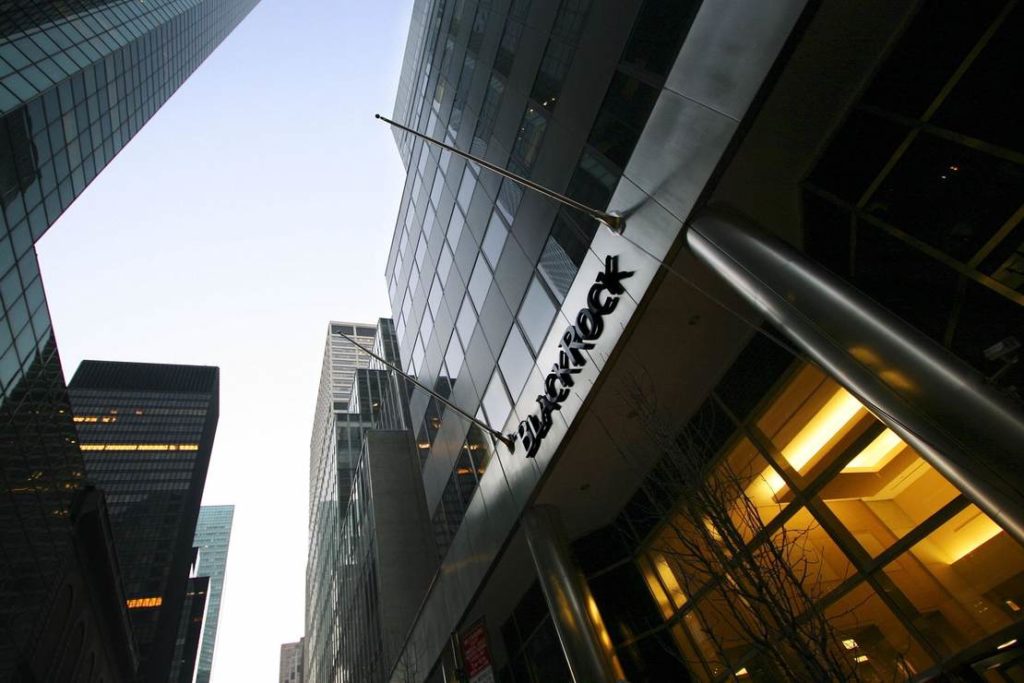
If you’re looking for specific examples of this, however, a good place to start is Larry Fink’s 2022 “Letter to CEOs,” in which Fink sings the praises of “stakeholder capitalism” and promises to use ESG scores as a way to alter society. Fink is the head of Blackrock, the world’s largest asset management company, and is widely considered one of the most powerful people on Wall Street, if not the most powerful person.
Of course, Fink attempts to put a happy face on ESG and stakeholder capitalism throughout his letter, but even he can’t help himself when discussing climate change, making it clear that companies must choose between being leaders or being dragged into a net-zero economy against their will.
“Every company and every industry will be transformed by the transition to a net zero world,” Fink wrote. “The question is, will you lead, or will you be led?”
Fink’s threats and those of others worked in large part. KPMG, an accounting firm reports Many thousandsMany companies have ESG systems, and 82 percent are large corporations in the United States. This data dates back a few years.
If investors and banks are willing to utilize ESG to control corporations, why wouldn’t they use ESG to manipulate individual and small business behavior as well?
- ESG is being used by Banks to fight climate change throughout all their business and portfolio activities
Openly, the most powerful and influential financial institutions and banks in America, Canada, Europe and Canada, have stated that they intend to use their wealth to make the world’s economy net-zero by 2050 and reduce CO2 emissions to half by 2030. This will be done in a variety of ways, including by “accelerating decarbonization in the real economy by describing financial sector expectations of transition plans from the companies the sector engages with and finances.”
Glasgow Alliance for Net Zero is one of the biggest groups of financial institutions that has promised to accelerate such an acceleration. There are already “over 450 financial firms across 45 countries responsible for assets of over $130 trillion” in GFANZ, including numerous large U.S. banks, such as Bank of America, J.P. Morgan Chase, and Wells Fargo & Company.
Banks cannot keep their promise of net-zero transition without placing ESG metrics and other similar criteria on small business owners.
Justin Haskins The Socialism Research Center at The Heartland Institute is headed by him. He also co-authored the New York Times bestseller book. Joe Biden and The Rise of Twenty-First Century Fascism are the Great Reset.This article does not reflect The Heartland Institute’s views.
About Post Author

You may also like
-
The European Union’s Path to Less Packaging Waste
-
How Commercial Roof Maintenance Can Improve Property Management
-
The Untraceable Isn’t Unprovable: Shantonia Wayne on the Paper Trail Behind Citizenship by Descent
-
The statistic behind every future-of-work speech deserves a closer look
-
Leigh Tesar Scheme Allegedly Targeted Terminally Ill Patients with High-Payout Wound Procedures
