

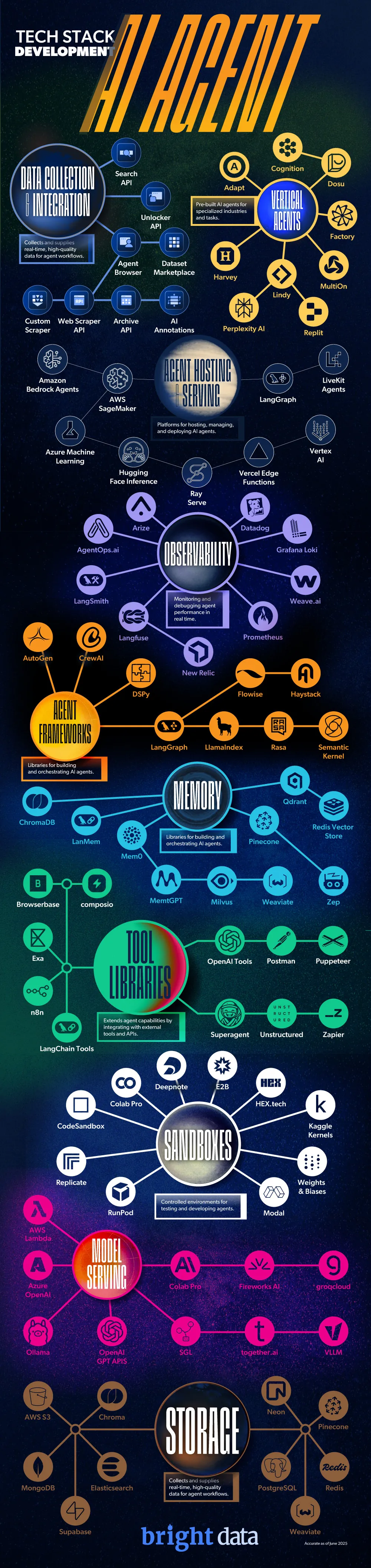
When designing an AI agent, a developer will want to use the AI agent tech stack. The tech stack is a layered system of tools that allow agents to function. Each layer has a unique purpose, yet creates a powerful and cohesive framework when put together.
The foundational layer of the tech stack is data collection and integration. With the help of this layer, the agent can access relevant data, allowing it to learn about the world in which it works. This is imperative to building a reliable agent, as data is the key to making decisions, taking actions, and continuous growth.
Tool libraries are another important tool within the stack, giving agents the capacity to interact with external entities. This is the layer that translates language models into action. Common platforms that help with tool libraries are LangChain, OpenAI Functions, and Exa.
Another important aspect of AI agent development is ensuring that the agent can remember past interactions and mistakes, and therefore improve its performance moving forward. Memory and storage are two layers in the tech stack that help with this portion of agent development. These systems allow agents to retain important context, which it can then use to inform future decisions.
There are other layers in the tech stack as well, each one forming a part of a complex web of tools and systems. Once a developer has studied and mastered the AI tech stack, the development process becomes significantly easier.
Source: Bright Data
About Post Author

You may also like
-
The European Union’s Path to Less Packaging Waste
-
How Commercial Roof Maintenance Can Improve Property Management
-
The Untraceable Isn’t Unprovable: Shantonia Wayne on the Paper Trail Behind Citizenship by Descent
-
The statistic behind every future-of-work speech deserves a closer look
-
Leigh Tesar Scheme Allegedly Targeted Terminally Ill Patients with High-Payout Wound Procedures
