
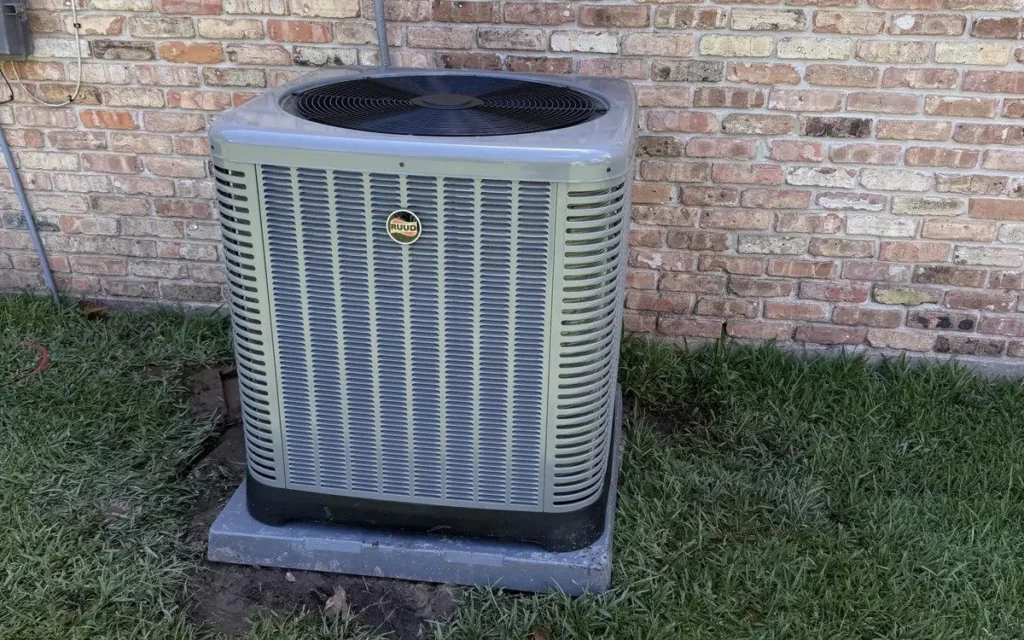
In most of the country, air conditioning is a comfort. In Louisiana, the federal government’s own housing data treats it as close to standard equipment.
That has practical consequences for homeowners in Denham Springs, Walker and the rest of Livingston Parish. A system that nearly every house depends on also ages, leaks and wears out on a schedule that most owners never write down.
Louisiana Relies on Central Systems More Than Most States
The U.S. Energy Information Administration surveys household energy use every few years. Its state-level results from the 2020 Residential Energy Consumption Survey are the most recent detailed look at what equipment Louisiana homes run.
Of about 1.73 million occupied primary homes in the state, 1.60 million used air conditioning, or 93%. The national figure was 89%.
The gap is wider for central systems. In Louisiana, 76% of homes used a central air conditioner or central heat pump, compared with 67% nationwide.
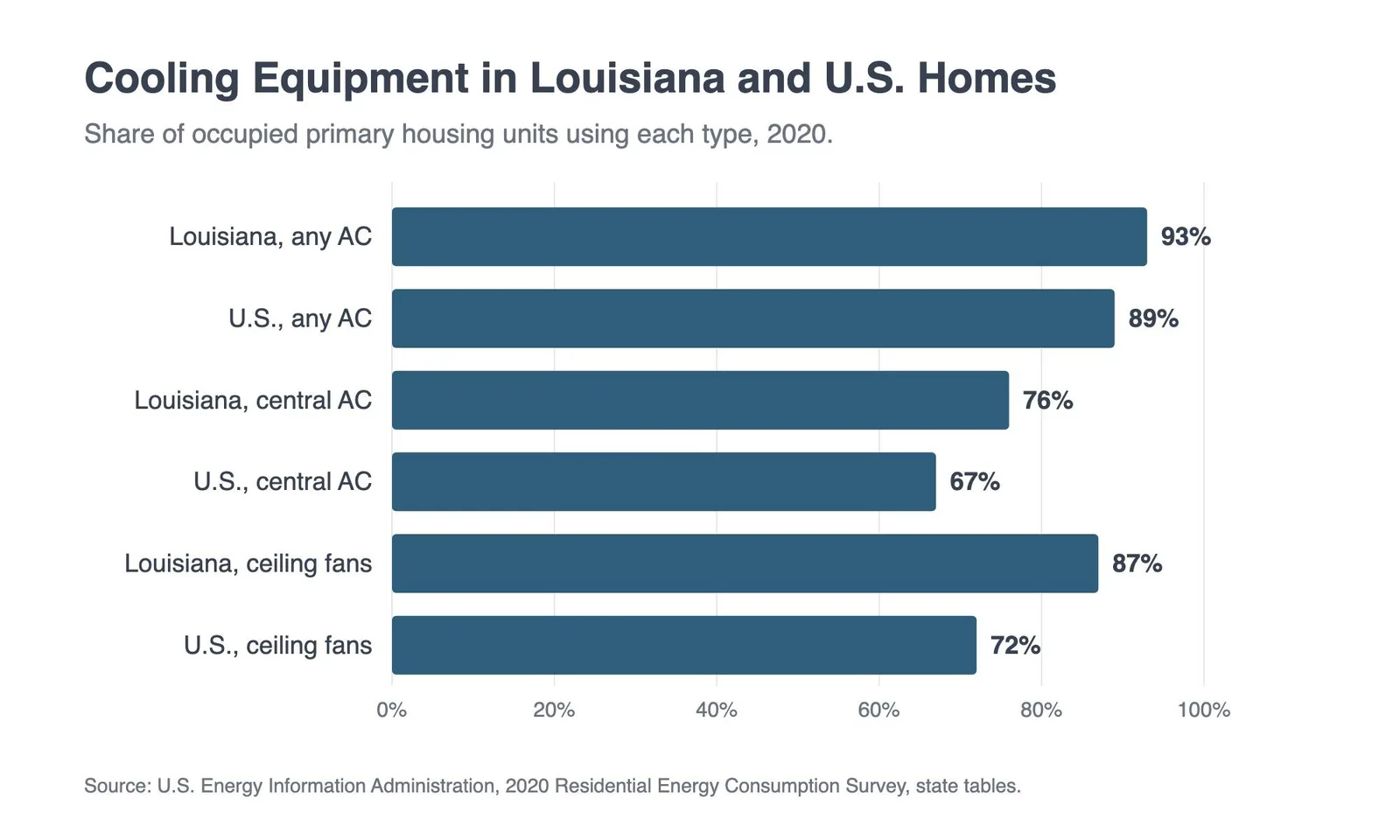
Cooling equipment in Louisiana and U.S. homes, 2020.
About a quarter of Louisiana homes, 25%, also used individual units. In the survey, that group covers window and wall units, portable units and ductless mini-splits.
Ceiling fans showed the biggest difference of all. They turned up in 87% of Louisiana homes, against 72% nationally.
No Parish-Level Count Exists
The survey stops at the state line. It does not publish separate figures for Livingston Parish or any city, and EIA notes that differences between states may not be statistically significant.
Still, the state numbers set a useful baseline. With three in four Louisiana homes on a central system, the outdoor condenser beside the house is the piece of equipment most local homeowners are dealing with.
Many Systems in the Region Are Past Their First Decade
The same survey asks how old each home’s main air conditioner is. For age, EIA reports by census division, and Louisiana falls in the West South Central division with Texas, Oklahoma and Arkansas.
Across that division, 13.84 million homes used air conditioning. The largest single group, 4.10 million, had equipment 5 to 9 years old.
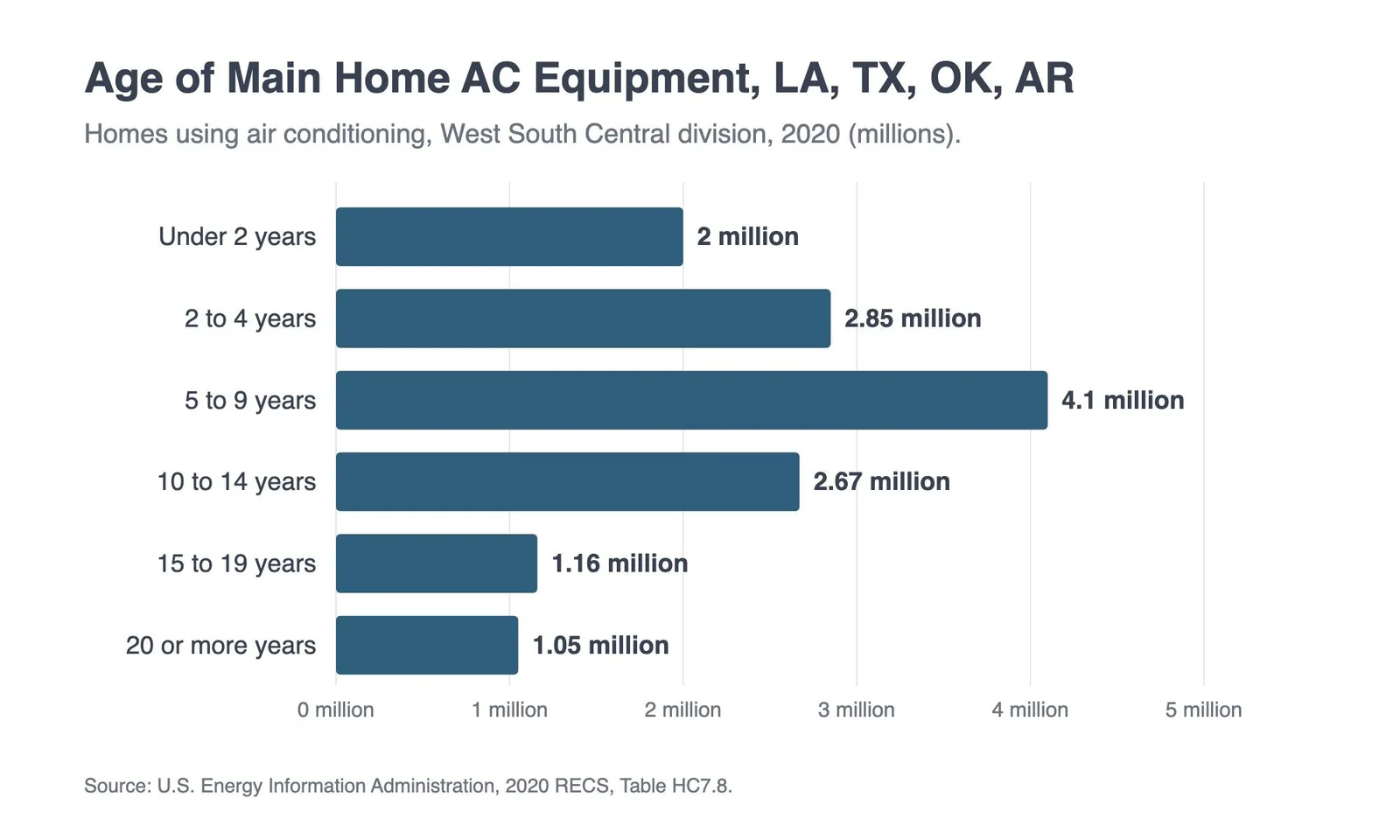
Age of main home air conditioning equipment, West South Central division, 2020.
The older end of the chart is large too. By our arithmetic, 4.88 million homes, about 35%, had a main system 10 or more years old, and 1.05 million had one 20 years old or older.
Those ages describe 2020. A system that was 10 years old when the survey was taken would be about 16 years old now, if it is still running.
The Refrigerant Question for Older Units
Age matters for another reason. Many older home systems use HCFC-22, the refrigerant often called R-22 or sold under the trade name Freon, and the federal government has phased it out.
According to EPA’s guidance for homeowners on the refrigerant phaseout, no new HCFC-22 has been made or imported in the United States since January 1, 2020. Recovered refrigerant that is cleaned to the same specifications as new remains available for servicing existing systems.
The agency is clear on two points that often get lost. It does not require homeowners to replace working R-22 equipment, and a central air conditioner that uses R-22 can no longer be purchased new.
EPA also notes that there are no “drop in” replacements for R-22. Switching an existing system to another refrigerant generally requires changes to system components, so many leak repairs on these units still use R-22.
The region’s oldest systems can include R-22 units. EPA says the refrigerant type is usually listed on the nameplate, which on a central system is typically on the outdoor condenser.
What the Federal Guidance Says About Upkeep
The EPA guidance is direct about what owners of older equipment should do. It calls proper maintenance the most important step an owner can take, because servicing limits refrigerant releases and prolongs the life of the system.
A few other points from the same guidance apply to any home system, old or new:
- Ask a technician to find and repair a leak rather than “topping off” a leaking system.
- Use a technician with EPA Section 608 certification, which is required to add refrigerant to home equipment.
- Have a system evaluated by an HVAC contractor if it is more than 10 years old or no longer keeps the house comfortable.
- Avoid products sold as “R-22a,” which EPA says are falsely marketed and contain flammable propane and butane.
Refrigerant for these systems is sold only to certified technicians or their employers, so a recharge is not a do-it-yourself job.
Who Handles the Work in Livingston Parish
Owners of older systems who want that evaluation usually turn to a local HVAC contractor.
Southern Dreams Mechanical is one company based in Watson, in Livingston Parish, that describes its residential and commercial air conditioning work on Southern Dreams Mechanical’s HVAC service page. It lists service, repair and replacement for cooling systems, along with heat pumps, ductless mini-splits, system tune-ups and indoor humidity control.
The company says a repair-or-replace decision depends on the unit’s age, the cost of the repair and how the system has been performing. It recommends service twice a year in this climate and lists Baton Rouge, Livingston Parish, Covington and Saint Francisville among the areas it serves.
A Short Checklist for Homeowners
None of this requires waiting for a breakdown. A few minutes outside, with a phone camera, answers most of the basic questions.
- Photograph the nameplate on the outdoor condenser and note the refrigerant type.
- Write down the model and serial numbers from the same plate for service records.
- If the system is past 10 years, plan an evaluation before the next cooling season.
- If a technician recommends adding refrigerant, ask where the leak is.
- Keep a record of each service visit, including any refrigerant added.
With 93% of Louisiana homes running air conditioning, the equipment is easy to take for granted. The federal data shows that a large share of them have already passed their first decade.
About Post Author

You may also like
-
Plumbing and HVAC Contracting Is a Trade of Small Shops, Federal Data Shows
-
Where Shingle Debris Goes After a Louisiana Re-Roof
-
Planning Dessert for a Holiday Office Party: Portions, Timing and the Two-Hour Rule
-
Big Business Lessons, Small Business Opportunities: Taylor Klemm’s Approach to Entrepreneurship
-
A Seasonal Pest Guide for Meridian Homeowners
