

Most people clear out a family home only once or twice in their lives. It usually happens at a hard time: after a death, a move to assisted living, or a sale that cannot wait.
The work is part logistics and part grief. A house that took fifty years to fill can feel impossible to empty in a few weekends, and the family members doing it often live hours away.
A plan helps. The steps below follow the order that tends to save the most time and the fewest regrets.
How common this job is around Baton Rouge
The need is large in the Capital Region. The Census Bureau’s American Community Survey, summarized in the Census Reporter profile of East Baton Rouge Parish, counts 50,103 households with at least one person 65 or older in its 2020 to 2024 estimates. In 20,904 of those homes, an older resident lives alone.
Next door, the Census Reporter profile of Livingston Parish shows 14,934 households with someone 65 or older, and 5,218 older residents living alone.
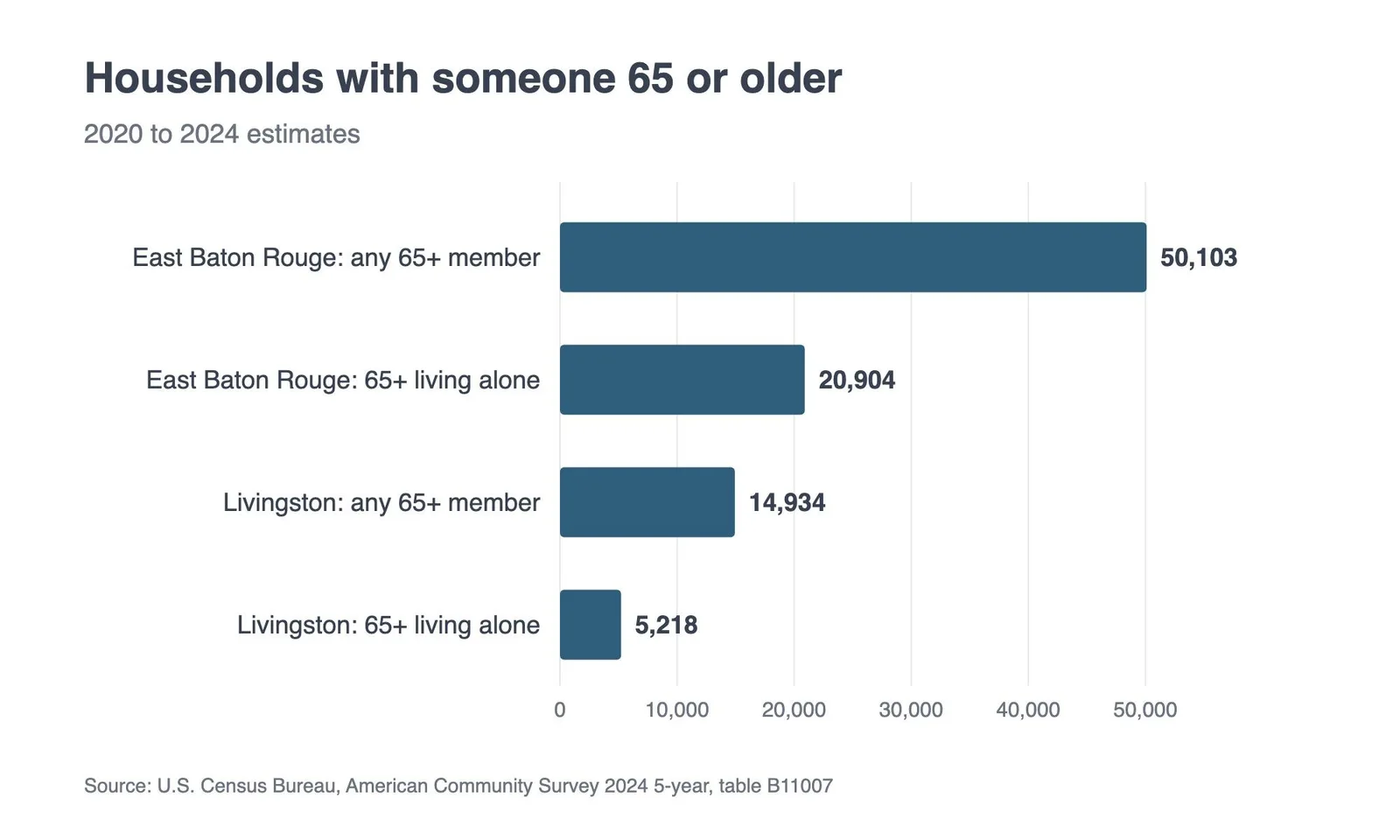
Source: U.S. Census Bureau, American Community Survey 2024 5-year estimates, table B11007.
Each of those homes will be downsized, sold, or passed down at some point. Many of the families who handle it will be doing it for the first time.
Step one: secure what matters before anything moves
Before a single box is packed, collect the items that cannot be replaced. That means wills, deeds, titles, insurance policies, tax records, bank statements, medications, keys, and passwords.
Then gather the sentimental pieces family members have asked for. Photos, letters, military papers, and recipe cards tend to hide in drawers and closets, so check every one.
Put everything in one room or one car, and label it. Many cleanout regrets start with a box of papers that went out with the trash.
Step two: let the family claim items in writing
Disagreements over belongings are common and painful. A simple list helps. Walk the house, note what each person wants, and settle conflicts before anything leaves.
Photos work well for relatives who cannot travel. A shared album lets a brother in Houston claim his father’s tools without driving in for the weekend.
Set a deadline for claims. Once it passes, everything left is fair game for donation, sale, or disposal.
Step three: sort what is left into four groups
What remains after the family has claimed its items usually falls into four groups:
- Items worth selling, such as quality furniture, tools and collectibles
- Items worth donating, such as sturdy, clean furniture, working appliances, and household goods
- Items that need a repair before anyone can use them
- Items that are broken, moldy, stained, or unsafe and need to go
Sorting is the slowest part of the job, and the part most families skip when time runs short. Skipping it is how usable furniture ends up in a landfill alongside the true junk.
Owned homes hold decades of belongings
Homeownership adds to the load. In Livingston Parish, 80.7 percent of occupied homes are owner-occupied, according to the same Census survey. In East Baton Rouge Parish, the figure is 59.3 percent.
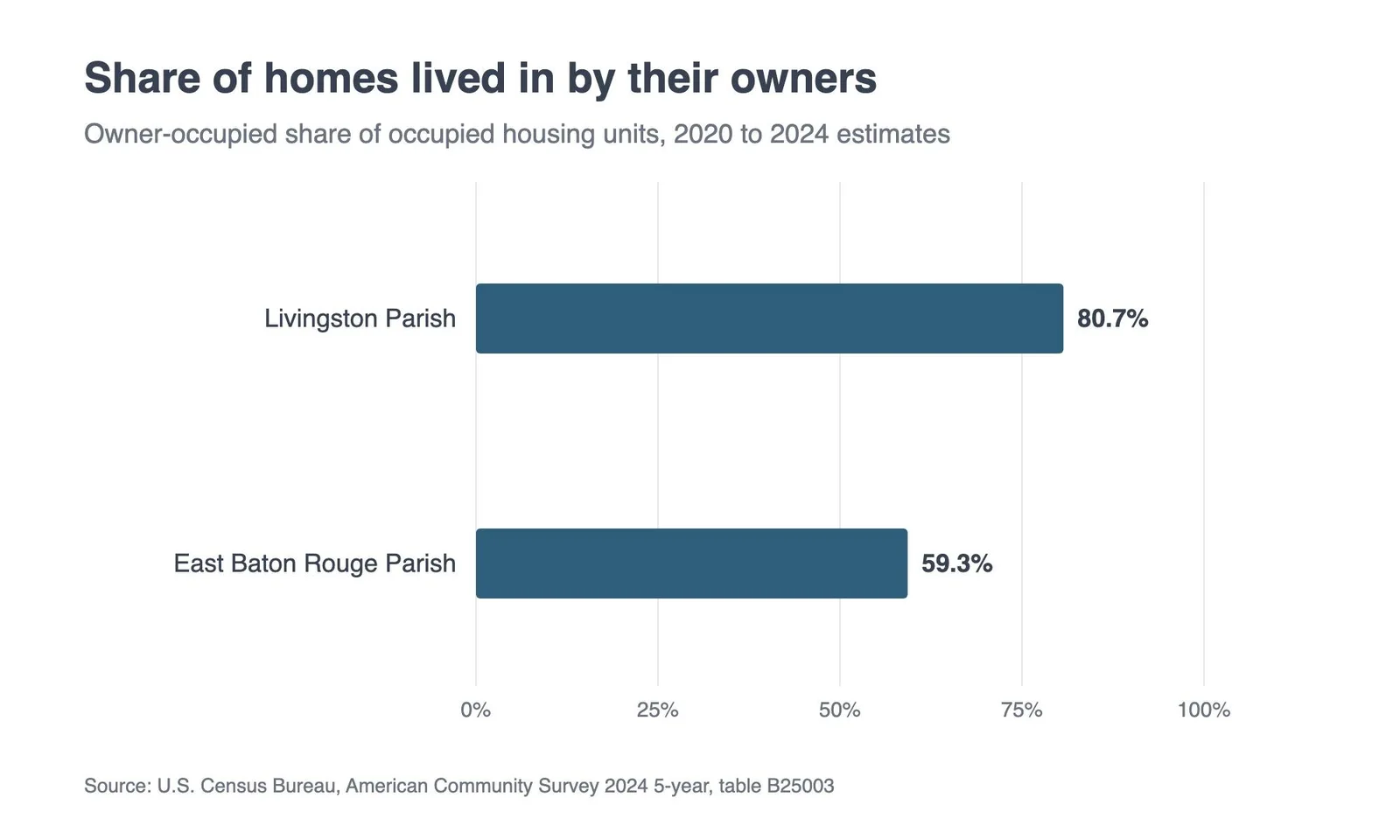
Source: U.S. Census Bureau, American Community Survey 2024 5-year estimates, table B25003.
Owners tend to stay longer than renters, and longer stays mean full attics, garages, sheds, and back bedrooms. A cleanout in an owned home often turns up far more than the main rooms suggest.
Step four: decide what you will haul and what you will hire out
Families can handle small loads themselves with a truck and a few trips. A full house, a packed garage, or heavy appliances usually call for help.
Ask any hauler the same few questions before booking:
- How is the price set, and when is it final?
- What happens to usable furniture and appliances after they leave?
- What items cost extra, such as refrigerators that still hold refrigerant?
- Will someone confirm when work starts and when it is done?
Clear answers to each one prevent most surprises.
How one local company handles it
In Livingston Parish, one option is Second Life Cleanouts, a Denham Springs junk removal company owned and run by Jordan Mercier. Its property cleanout service is described at secondlifecleanouts.com.
The company works from photos first. Families text pictures of what needs to go, and Mercier replies with a free price range based on load volume. The final price is set in person, before anything is loaded.
On the day of the job, the company texts when it arrives and when it leaves, clears the house in one visit, and sends before-and-after photos room by room. That last step matters to families who live out of town and cannot inspect the house themselves.
Every load is sorted by hand. Usable furniture and working appliances go to local community thrift stores; pieces that need repair go only to vetted stores that fix them before resale; and the rest is disposed of properly. The company is new and says so, and it serves four parishes around Greater Baton Rouge.
Each donation is posted to the company’s Facebook page with photos and the name of the store that received it. Families settling an estate can also ask for a donation summary for their records, or to forward to another heir or an attorney handling the estate.
Step five: close out the house
Once the rooms are empty, do a final walk with fresh eyes. Check the attic, under sinks, the tops of closets, the shed, and the mailbox.
Cancel utilities, forward mail, and notify the insurer if the house will sit empty. Take photos of each room for the estate file or the sale.
A last word on pace
There is no prize for finishing in a weekend. If the house can wait, take the time to go through it carefully. The furniture that one family no longer needs is exactly what another family is shopping for, and the papers in the back of a drawer can matter for years.
About Post Author

You may also like
-
Home Air Conditioning in Louisiana in Federal Energy Survey Data
-
Plumbing and HVAC Contracting Is a Trade of Small Shops, Federal Data Shows
-
Where Shingle Debris Goes After a Louisiana Re-Roof
-
Planning Dessert for a Holiday Office Party: Portions, Timing and the Two-Hour Rule
-
Big Business Lessons, Small Business Opportunities: Taylor Klemm’s Approach to Entrepreneurship
