
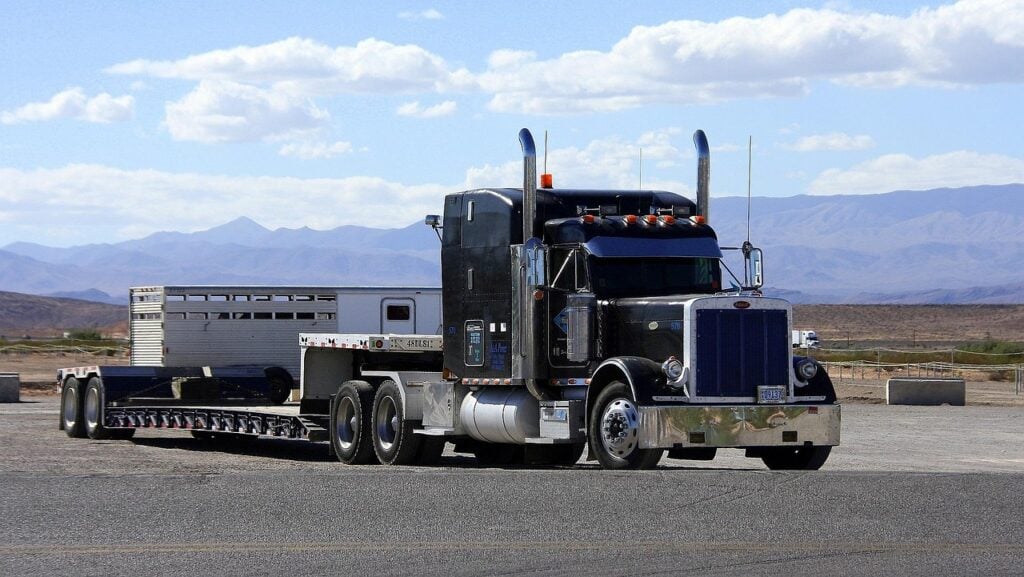
A collision with an 18-wheeler is not like a collision with another passenger car. The size difference alone — a fully loaded semi can weigh up to 80,000 pounds compared to roughly 4,000 for a typical sedan — means the injuries are often severe, the vehicles are totaled, and the legal situation is significantly more complicated than a standard car accident claim.
What you do in the minutes, hours, and days after a truck crash directly affects your physical recovery, your legal rights, and your ability to recover full compensation. This article walks through the specific steps that matter most.
Get Safe and Call 911 Immediately
Your first priority is your own safety. If the vehicles are drivable and you can move out of active traffic without making your injuries worse, do so. Turn on your hazard lights. If you cannot move, stay in your vehicle with your seatbelt on until emergency services arrive, unless there is an immediate fire or other danger that requires you to exit.
Call 911 even if you think your injuries are minor. A police report is mandatory documentation for any subsequent legal claim, and emergency responders can identify injuries you may not yet feel. Adrenaline masks pain. Serious injuries from truck crashes, including internal bleeding, spinal damage, and traumatic brain injuries, frequently do not present with obvious symptoms at the scene.
When police arrive, give them an accurate account of what happened. Do not speculate about fault and do not minimize your symptoms. If you are in pain or feel disoriented, say so.
Document the Scene Before Anything Moves
Truck accident scenes change quickly. The truck may be moved to clear traffic. Debris gets swept away. Skid marks fade. Take photographs and video immediately if you are physically able to do so safely.
Document the following:
The position of both vehicles before they are moved. The truck’s license plate, the carrier’s DOT number displayed on the cab door, and the truck’s unit number. Any visible cargo spills or unsecured load issues. The road conditions, weather, traffic signals, and any posted speed limits. The driver’s commercial driver’s license, insurance information, and employer information. The names and contact information of every witness at the scene.
The truck’s DOT number is particularly important. It allows you and your attorney to pull the carrier’s safety record from the federal database, including prior violations, inspection failures, and accident history.
Seek Medical Care the Same Day
Go to an emergency room or urgent care facility on the day of the crash, even if you walked away from the scene. This is not optional.
Truck accident injuries that appear minor at first include herniated discs, soft tissue damage, internal organ injuries, and concussions. These conditions can worsen significantly over the following 48 to 72 hours. A same-day medical visit creates a dated record that directly connects your injuries to the accident. Waiting gives the defense room to argue that your injuries came from something that happened after the crash.
Follow every treatment recommendation your doctors make. Gaps in treatment are one of the first things insurance adjusters look for when they review your medical records. A three-week gap between appointments becomes an argument that you recovered and then resumed treatment later to inflate your claim.
Do Not Talk to the Trucking Company’s Insurance Adjuster
The carrier’s insurance company will contact you quickly. Trucking companies and their insurers have experienced claims teams, and they begin working on the case from the moment the crash is reported. Some carriers dispatch their own investigators to the accident scene within hours.
Do not give a recorded statement to the carrier’s insurer. You are not legally required to, and nothing you say to them will help your claim. Adjusters ask specific questions designed to get you to minimize your injuries, suggest you share fault, or make statements that contradict your later medical records.
You can confirm basic facts, name, date, general location, but anything beyond that should wait until you have legal representation. Tell them you will have your attorney contact them.
Understand Why Truck Accident Cases Are Different
An 18-wheeler crash involves layers of potential liability that a standard car accident does not. The driver, the carrier, the owner of the trailer (which is often separate from the cab), the company that loaded the cargo, and the manufacturer of any defective component can all be named as defendants depending on the facts.
Federal regulations govern commercial trucking in ways that create specific legal obligations for carriers and drivers. The Federal Motor Carrier Safety Administration sets the rules for hours of service, driver qualification, vehicle maintenance, drug and alcohol testing, and cargo securement. When those rules are violated, the violation becomes direct evidence of negligence in a civil lawsuit.
The Federal Motor Carrier Safety Administration publishes its full regulatory database publicly, including carrier safety ratings, inspection records, and violation histories. Your attorney will use this database to investigate the carrier’s compliance record before and after the crash.
Texas follows a modified comparative fault rule. You can recover compensation as long as you were 50% or less at fault for the accident. The carrier’s insurer will look for any evidence that assigns you a share of fault, because every percentage point reduces their payout. This makes the evidence gathered at the scene and in the immediate aftermath especially important.
Send a Spoliation Letter as Soon as Possible
This step is one of the most important actions your attorney will take, and it needs to happen quickly.
A spoliation letter places the carrier on legal notice to preserve all evidence related to the crash. This includes the truck’s electronic logging device data, which records driving hours and can confirm whether the driver exceeded federal limits. It includes black box data showing vehicle speed, braking inputs, and engine activity in the seconds before the crash. It includes the driver’s personnel file, qualification records, drug and alcohol testing history, and training records. It includes maintenance records for the specific truck and trailer. It includes all internal communications about the crash.
Electronic data can be overwritten. Trucks are repaired and returned to service. Without a preservation demand, evidence disappears within days or weeks. Courts can instruct juries to draw adverse inferences when a carrier destroys or fails to preserve evidence after receiving a spoliation notice.
Identify All Potential Defendants
One of the first things your attorney does in a truck crash case is map the full chain of parties involved in the operation of that truck on the day of the crash.
The carrier is the company that employed or contracted the driver. If the driver was an independent owner-operator leased to a carrier, both may be liable. The trailer owner, if separate from the carrier, is responsible for the trailer’s maintenance and condition. If a third-party company loaded the cargo and it was improperly secured, that company may share liability for a crash caused by a shifting or falling load. If a defective component, such as a brake failure or a tire blowout caused by a manufacturing defect, contributed to the crash, the manufacturer can be named.
Texas law allows fault to be allocated among multiple defendants. Identifying all of them matters because it affects both who can be held accountable and what insurance coverage is available to satisfy a judgment.
Gather Your Own Evidence Independently
Do not rely entirely on the police report. Law enforcement documents the scene from a traffic safety perspective, not a civil litigation perspective. Their report may note the basic facts of the collision without capturing the evidence that matters most for establishing liability.
Hire an accident reconstruction expert early if your injuries are serious. These experts analyze vehicle damage, skid marks, road geometry, impact angles, and electronic data to produce a detailed account of exactly what happened and why. Their analysis can contradict a driver’s account and establish facts the insurer cannot easily dispute.
Request surveillance footage immediately. Many Texas highways and intersections have traffic cameras, and commercial properties near the crash site may have exterior cameras that captured the collision. Businesses typically overwrite footage on a 10 to 30-day cycle. Getting to that footage before it is gone can be decisive.
Calculate the Full Scope of Your Damages
Serious truck accident injuries produce damages that extend well beyond the initial hospital bill. Your claim should include every category of loss the crash caused you.
Past medical expenses cover everything from the emergency room visit through your current treatment.
Future medical expenses cover projected costs for surgeries, physical therapy, medication, and long-term care your physicians anticipate. Life care planners produce detailed projections of what ongoing care will cost over your expected lifetime.
Lost wages cover income you have already missed because of the crash and your recovery.
Lost earning capacity covers the reduction in what you can earn going forward if the injury limits your ability to work. Vocational experts and economists quantify this based on your age, occupation, education, and the nature of your limitations.
Pain and suffering covers physical pain, emotional distress, and the impact of the injury on your daily life and relationships.
Property damage covers your vehicle and any personal property destroyed in the crash.
Settling before you reach maximum medical improvement, the point at which your treating physicians say your condition has stabilized, means settling without knowing what your future medical costs will actually be. Once you sign a release, the case is over.
Why Legal Representation Changes the Outcome
Truck accident cases against large carriers involve experienced defense teams, significant insurance coverage, and aggressive claims management. The carrier’s insurer begins building its defense from day one. Policyholders who handle these claims without representation are at a significant structural disadvantage.
An attorney with truck accident experience knows which records to request, which experts to retain, how to read ELD data and maintenance logs, and how to build a damages case that reflects the full value of a serious injury. This analysis of the critical role skilled counsel plays in truck accident cases covers in detail why legal representation consistently produces better outcomes in commercial truck litigation.
The difference between accepting the carrier’s first offer and litigating a fully documented serious injury claim can reach hundreds of thousands of dollars on cases involving significant injuries and clear carrier negligence.
If you were seriously injured in a collision with a commercial truck in South Texas, consulting with a Corpus Christi 18-wheeler accident lawyer gives you an independent evaluation of your claim, the evidence that exists, and what your case is realistically worth before you make any decisions about settlement.
The Statute of Limitations in Texas
Texas gives personal injury plaintiffs two years from the date of the accident to file a lawsuit. Missing that deadline ends your right to pursue the case regardless of how serious your injuries are or how clear the carrier’s liability is.
Two years feels like a long time when you are focused on recovering. It is not. Building a truck accident case requires gathering records that are time-sensitive, retaining experts, completing your medical treatment, and conducting discovery. Starting that process early gives your attorney the most time and the most options.
If the truck was operated by a government entity or if any government party is involved, the notice requirements may be shorter. Texas requires pre-suit notice to government entities within six months under certain circumstances.
A Practical Checklist for the Days After a Truck Crash
In the first 24 hours: get medical care, file a police report, photograph the scene and vehicles, collect the driver’s information and the carrier’s DOT number, and write down everything you remember about the crash.
In the first week: retain an attorney, send a spoliation letter to the carrier, request surveillance footage from nearby businesses and traffic authorities, and follow all medical treatment recommendations without gaps.
In the following weeks: keep records of every medical appointment, every prescription, and every day of missed work. Do not post about the accident or your injuries on social media. Do not give statements to any insurer without your attorney present.
For background on Carrigan & Anderson and their experience handling truck accident and serious injury claims in Corpus Christi, their listing on Lawyers.com provides additional detail for anyone evaluating legal representation in South Texas.
A collision with an 18-wheeler changes your life quickly. The decisions you make in the days that follow determine how much of what you are owed you actually recover. Document everything, get to a doctor, and get legal representation before the carrier’s team has had weeks to work the case without you.
About Post Author

