
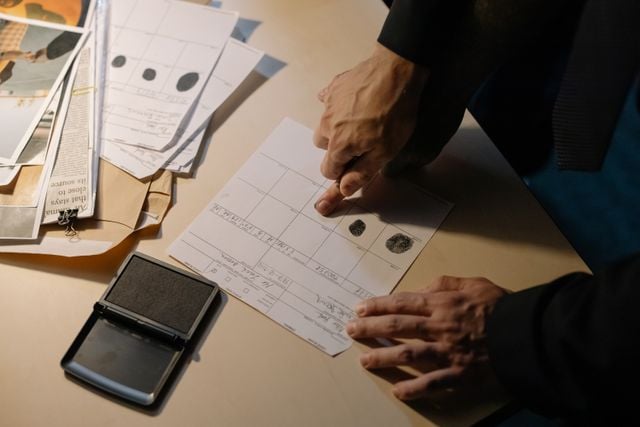
Suffering an injury in an accident does not automatically mean someone else is legally responsible. To pursue a personal injury claim based on negligence, you generally need evidence showing that another party failed to exercise reasonable care and that this failure caused your injuries.
Photographs, witness accounts, medical records, and other documents can help establish what happened. The quality, accuracy, and relevance of this evidence can influence how insurance companies and courts evaluate your claim.
Understanding the Legal Requirements for Negligence
Before collecting evidence, it helps to understand what you may need to prove. Cornell Law School’s Legal Information Institute explains the elements of negligence, which generally involve four main requirements:
- Duty of care: The other party had a legal obligation to exercise reasonable care under the circumstances.
- Breach of duty: The other party failed to meet that obligation.
- Causation: The failure caused your injuries, both factually and legally.
- Damages: You suffered legally recognized harm or losses because of the incident.
Consider a driver who runs a red light and strikes another vehicle. Traffic laws help establish the driver’s obligations, camera footage may demonstrate a violation, and medical records may connect the resulting injuries to the collision.
Each piece of evidence serves a different purpose. Establishing that someone acted carelessly does not, by itself, prove the extent of your financial losses.
Photographs of the Accident Scene
Photographs can document physical conditions that may have contributed to an accident. They can also preserve details that disappear before an investigation takes place.
If you can safely take photographs, capture the surrounding area as well as specific hazards. Following a car accident, this might include vehicle damage, traffic signs, road markings, and the positions of vehicles.
For an accident on commercial property, photographs may document damaged flooring, poor lighting, broken handrails, or the absence of warning signs.
Take pictures from several angles and retain the original files. Avoid cropping, editing, or applying filters to your only copies. Original image files may contain timestamps and other information useful during an investigation.
Photographs establish what was visible at a particular moment. Additional evidence may be necessary to determine how long a hazard existed or whether someone had a reasonable opportunity to address it.
Video Footage and Surveillance Recordings
Video recordings can provide information about the events leading up to an accident. Dashcams, security cameras, and traffic cameras may capture details that witnesses cannot remember accurately.
For example, footage of a vehicle entering an intersection against a red light may help establish a breach of the driver’s duty of care.
If you notice cameras near the accident location, record their locations and identify the businesses or organizations responsible for them. Ask the relevant parties to preserve any available recordings.
Act promptly because some surveillance systems automatically overwrite older footage. An attorney may also help arrange formal preservation requests when appropriate.
Keep original recordings, create secure backup copies, and avoid publishing edited clips on social media.
Witness Statements and Contact Information
Witnesses may provide independent accounts of an accident. Their observations can help clarify disputed details, including the actions of those involved and the conditions at the accident location.
If someone witnessed your accident, ask for their full name, telephone number, and email address. Note where they were standing or driving when the incident occurred.
Ask witnesses to describe what they personally observed. Avoid suggesting answers or asking them to support your version of events.
A witness who saw a driver looking at a phone immediately before a collision may provide information relevant to distracted driving. However, the accuracy and reliability of that account still require evaluation alongside other evidence. Witness statements, vehicle damage, and road conditions are among the factors considered when determining fault in a car accident
Record witness contact details promptly so investigators or attorneys can contact them later.
Police Reports and Workplace Incident Records
Official reports can provide useful information about the circumstances surrounding an injury. Depending on the accident, these may include police crash reports, workplace incident reports, or records prepared by property managers.
Such documents may contain the date and location of the incident, witness information, observations about physical conditions, and statements made by those involved.
Request copies of relevant reports and check whether they accurately reflect the information you provided.
If you discover a factual error, ask the organization that prepared the report about its correction procedures.
An incident report does not automatically establish negligence. Investigators may need to examine additional evidence, and the report’s conclusions may be disputed.
Medical Records and Evidence of Injuries
Medical records help establish the nature of your injuries, when you received treatment, and how your condition has affected your daily activities.
Seek appropriate medical attention after an accident and explain how the incident occurred. Describe your symptoms accurately, including any relevant pre-existing conditions.
Useful medical documentation includes emergency department records, diagnostic imaging, physician notes, surgical reports, rehabilitation assessments, and written work restrictions.
For example, an MRI confirming a shoulder injury may establish the existence of physical damage. A medical specialist’s assessment may help determine whether the injury resulted from the accident or another cause.
Medical evidence primarily supports causation and damages. It does not necessarily establish that another person acted negligently.
Documenting Financial Losses
Even when evidence supports another party’s responsibility, you still need documentation of the losses associated with your injuries.
Keep medical bills, prescription receipts, rehabilitation invoices, and records of transportation expenses related to treatment.
If your injuries prevent you from working, request an employer statement confirming your missed hours and regular earnings. Save pay stubs, tax documents, and medical work restrictions.
Hypothetical Example: Documenting Lost Wages
Suppose you earn $25 per hour and miss 120 working hours because of an accident-related injury.
Your estimated lost gross wages would be $3,000.
Payroll records and medical documentation may help substantiate this amount. However, the calculation does not guarantee that you will recover $3,000 through an injury claim.
Maintain separate records of expenses already incurred and anticipated future costs. This can help prevent duplicate calculations and unsupported estimates.
How Expert Analysis Can Support a Claim
Some accidents involve technical questions that photographs and witness statements cannot fully resolve.
Accident reconstruction specialists may examine vehicle damage, road conditions, and physical evidence to assess how a collision occurred.
Medical experts may evaluate whether an accident caused a particular injury and whether additional treatment will be necessary. Engineering or safety specialists may assess defective equipment or hazardous property conditions.
Financial and vocational experts may also help estimate future earnings losses when an injury affects your long-term ability to work.
Expert opinions can support specific aspects of a negligence claim, but their reliability depends on the available evidence, methodology, and professional qualifications.
Understanding the Role of Shared Fault
Accidents sometimes involve careless actions by more than one person. An insurance company or opposing party may argue that your conduct contributed to your injuries.
Evidence such as complete video recordings, witness accounts, and accident reconstruction findings can help evaluate these allegations.
Avoid destroying or withholding information simply because you believe it could weaken your claim. Preserve relevant records and provide an accurate account of what happened.
The effect of shared fault on compensation depends on the applicable law and the circumstances of the case.
When Legal Assistance May Help
Gathering evidence can become difficult when multiple parties are involved, surveillance footage is unavailable, or an insurer disputes the cause of your injuries.
Consulting experienced personal injury lawyers may help you identify relevant evidence, understand legal requirements, and determine whether professional analysis could support your claim.
When researching attorneys, review their practice areas and experience with similar cases. Professional directory listings, such as Behzadi Law’s profile, can provide a starting point for researching legal representation.
Bring your photographs, medical records, incident reports, witness contact information, and financial documents to your consultation.
Preserving Evidence Throughout Your Recovery
Create a dedicated folder for accident-related documents. Organize records by date, retain original digital files, and maintain secure backups.
Continue updating your medical and financial records as your recovery progresses. Document changes in your symptoms, employment restrictions, treatment requirements, and expenses.
Avoid making unsupported assumptions about the accident or exaggerating your losses. Consistent and accurate documentation can make it easier to evaluate your claim.
No single photograph, witness statement, medical diagnosis, or incident report guarantees compensation. A negligence claim generally depends on how the available evidence establishes legal responsibility, causation, and the harm you suffered.
About Post Author

