
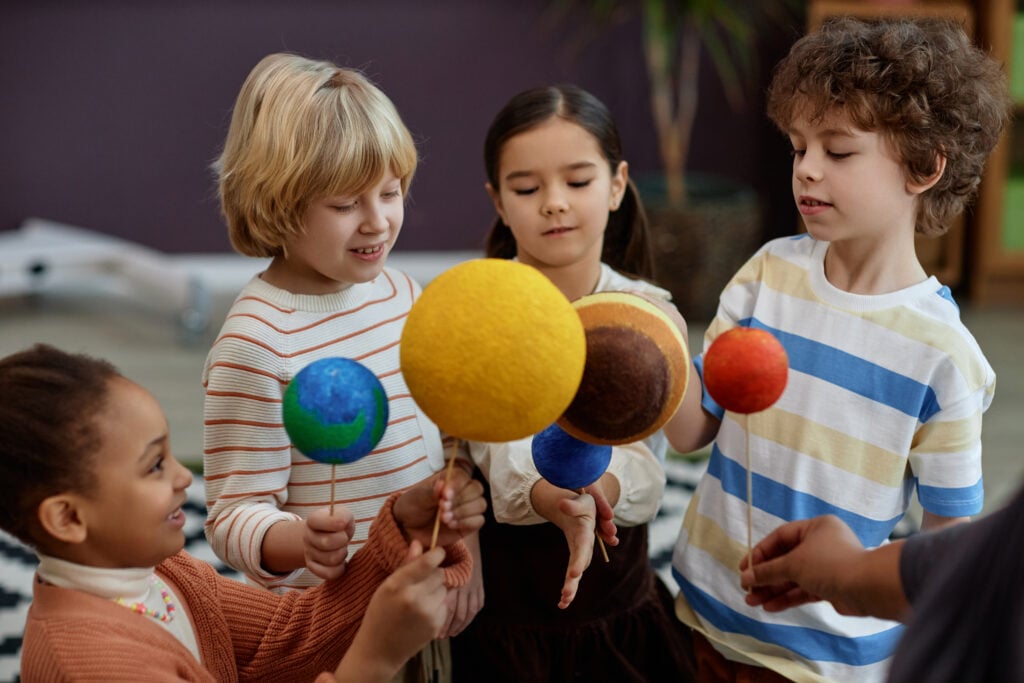
Watching a child grow is a series of small miracles: the first wobbly steps, the first time they hold a crayon and scribble something that resembles a circle. These milestones fall into two important categories of physical development—fine motor skills and gross motor skills. While both are essential to a child’s growth, they serve different purposes and develop in distinct ways. Understanding the difference can help parents and educators better support children as they build the physical foundation for learning and independence.
What Are Gross Motor Skills?
Gross motor skills involve the large muscle groups in the arms, legs, and torso. These skills allow children to perform movements like crawling, walking, running, jumping, and climbing. Gross motor development is typically the first to emerge, as babies learn to control their heads, roll over, sit up, and eventually stand and walk.
In early education settings, gross motor activities often take the form of active play. Running games, obstacle courses, dancing, and outdoor exploration all encourage children to strengthen their large muscles while having fun. This kind of movement-based learning is not just about physical fitness; it also supports cognitive development, as children learn cause and effect, problem-solving, and following multi-step directions during active play.
What Are Fine Motor Skills?
Fine motor skills, by contrast, involve the smaller muscles found in the hands, fingers, and wrists. These skills are essential for tasks that require precision and control, such as grasping a spoon, buttoning a shirt, cutting with scissors, or writing letters. Fine motor development tends to progress a bit more gradually than gross motor development, since it requires more refined muscle control and hand-eye coordination.
Early signs of fine motor development include a baby’s ability to grasp objects, transfer items from one hand to another, and use a pincer grasp to pick up small items. As children enter early education programs, fine motor skills become increasingly important for classroom tasks like drawing, stacking blocks, threading beads, and eventually writing their names.
Why Both Skill Sets Matter
Fine and gross motor skills don’t develop in isolation. Instead, they work together to support a child’s overall growth. A child who has strong gross motor skills is often better equipped to sit still and focus during activities that require fine motor precision, since core strength and postural control contribute to hand stability. Similarly, children who practice fine motor tasks often improve their hand-eye coordination, which can benefit gross motor activities like catching a ball or navigating obstacles.
In early education, teachers often design classroom environments that promote the development of both skill types throughout the day. A morning might begin with active movement, like stretching or a group game, before transitioning into fine motor–focused activities like drawing or cutting with scissors. This balance helps children build well-rounded physical capabilities while keeping them engaged and interested.
Supporting Development at Home and in the Classroom
Parents and educators can play an active role in nurturing both fine and gross motor skills. Simple, everyday activities—such as encouraging a child to help pour their own drink, climb at the park, or draw with chalk on the sidewalk—can make a meaningful difference over time. The key is offering a variety of experiences that challenge different muscle groups without creating pressure or frustration.
It’s also worth remembering that every child develops at their own pace. Some children may show early strength in gross motor tasks while still refining their fine motor control, and vice versa. Patience, encouragement, and plenty of opportunities for practice go a long way in helping children reach their developmental milestones.
Bringing It All Together
Fine motor and gross motor skills each play a distinct but complementary role in a child’s development. Gross motor skills build the strength and coordination needed for large movements, while fine motor skills refine the precision required for detailed tasks. Together, they lay the groundwork for a child’s physical, cognitive, and academic growth. By understanding these differences, parents and educators can create environments that nurture both types of development, giving children the tools they need to explore, learn, and thrive.
About Post Author

